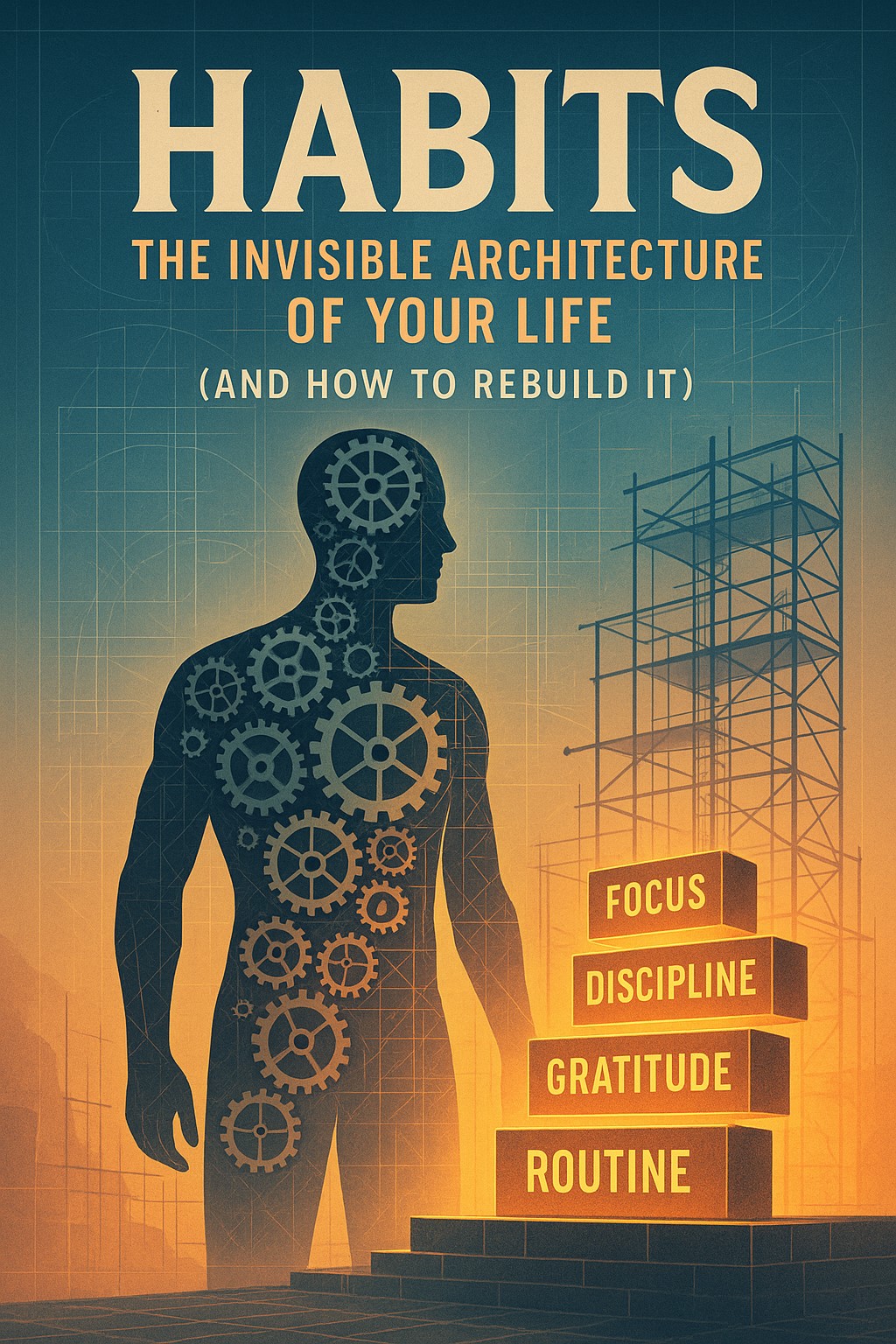
Habits: The Invisible Architecture of Your Life - How to Rebuild
Habits: The Invisible Architecture of Your Life - How to Rebuild
June 12, 2025 | Action, Authenticity, Change, Coaching, Courage, Goals, Integrity
Habits: The Invisible Architecture of Your Life (And How to Rebuild It)
You Don’t Decide Your Future—You Decide Your Habits
Every day, whether you realize it or not, you’re living inside a system of habits. From how you brush your teeth, to the way you think under pressure, to what you eat when you're stressed—your habits shape you far more than your intentions ever will. You may have goals and dreams, but it's your habits that will either build them or break them.
But what is a habit, really? Why do bad ones stick like superglue and good ones vanish like smoke? And more importantly—how do we break the destructive loops and build the life-changing ones?
Understanding Habits – The Mechanics of the Mind
What Is a Habit?
A habit is a behavior that has become automatic through repetition. Habits live in the subconscious—they no longer require effort or decision. They are mental shortcuts, designed by the brain to conserve energy and optimize performance.
Psychologists call it the “habit loop,” which consists of:
Cue – a trigger or signal that starts the behavior
Routine – the behavior itself
Reward – the benefit your brain gets, reinforcing the loop
Over time, your brain starts craving the reward the moment the cue shows up—whether the routine is helpful or harmful.
The Science of Habit Formation
The modern understanding of habits was shaped by research in neuroscience and behavioral psychology. One of the most cited models comes from MIT studies showing that habits are stored in the basal ganglia, the same area of the brain responsible for emotions, pattern recognition, and memory.
The prefrontal cortex—your "rational brain"—helps with decision-making, but habits run deeper. That’s why you can find yourself biting your nails or opening social media without thinking.
🔍Key Insight: The brain can’t easily tell the difference between a good habit and a bad one—it just wants to repeat what brings a reward.
The History of Habit Thinking
The idea of habit shaping behavior isn't new. Ancient philosophers from Aristotle to Confucius believed that character is formed by repeated actions. “We are what we repeatedly do. Excellence, then, is not an act, but a habit,” Aristotle famously wrote.
In the 20th century, B.F. Skinner introduced operant conditioning, showing how behaviors can be trained or untrained using rewards and punishments. Later, Charles Duhigg’s The Power of Habit and James Clear’s Atomic Habits popularized practical systems for reshaping habit loops in everyday life.
The Trap of Bad Habits
Why Bad Habits Stick
Immediate Reward:Smoking relieves stress now. Junk food tastes great now. Procrastination feels safe now.
Delayed Consequences:The pain comes later—weight gain, regret, poor health, missed opportunities.
Stress Loops:Many habits are emotional escapes. We don’t smoke or binge or scroll out of pleasure—we do it out of numbing.
🔁 Bad habits are often solutions to deeper unmet needs: stress, boredom, loneliness, fear.
Breaking the Chain – How to Run From Bad Habits
Breaking a habit isn’t about willpower. It’s about rewiring your brain and replacing the loop. Here’s how:
1. Identify the Loop
Become a detective:
What’s the cue? (Time of day? Emotion? Location?)
What’s the routine?
What’s the reward? (Relief? Stimulation? Escape?)
Write it down. Bring the habit from autopilot to awareness.
2. Interrupt the Trigger
Remove the cue if possible. If you binge at night, stop bringing junk food home. If social media steals your mornings, delete the app or leave your phone out of the bedroom.
3. Replace the Routine
You can’t erase a habit—but you can replace the behavior with one that delivers asimilar reward.
Stress? Replace a cigarette with 10 deep breaths or a walk.
Boredom? Replace scrolling with journaling or calling a friend.
Anxiety? Replace eating with movement or stretching.
4. Make It Harder to Do the Bad Thing
Put friction between you and the habit.
Lock snacks in a box.
Use website blockers.
Unsubscribe from triggers.
5. Reward the Change
The brain needs positive reinforcement to build new circuits. Give yourself a dopamine hit for doing the right thing:
Track streaks
Share your win
Give yourself small celebrations
Rebuilding With Better Habits
Building good habits is like planting seeds. They start slow, but compound massively.
How to Build a Good Habit:
Start Tiny
Don’t aim to read 30 minutes. Aim to read1 page. Success grows from consistency, not intensity.Stack Habits
Link a new habit to an existing one:
After I brush my teeth, I’ll meditate for 2 minutes.
After I pour my coffee, I’ll write 3 things I’m grateful for.
Use Visual Cues
Put your running shoes by the door. Put a sticky note on your mirror. Create an environment that pulls you forward.Track Progress
Visual progress (habit trackers, journals) reinforces identity. “I’m the kind of person who does this.”Don’t Miss Twice
Everyone slips. The rule is simple:never skip the habit two days in a row.
Identity – The Root of All Habits
True habit change goes deeper than behavior—it hits identity.
Don’t just say: “I want to eat healthy.”
Say:“I’m a healthy person.”
Your brain will fight to stay consistent with your identity. When your habits align with who you believe you are, they become effortless.
Call to Action: Rebuild Your Life—One Habit at a Time
You don’t rise to the level of your goals—you fall to the level of your systems. And those systems are made of habits.
Start now.
🔹Pick one bad habit. Name it. Observe it. Interrupt it. Replace it.
🔹Pick one positive habit.Make it so small it’s impossible to fail.
🔹Track it. Celebrate it. Live it.
🔹Become the kind of person you’ve always wanted to be.
“First we make our habits, then our habits make us.”
Now, who is the Boss here…? Ace 😊
Share this post :)