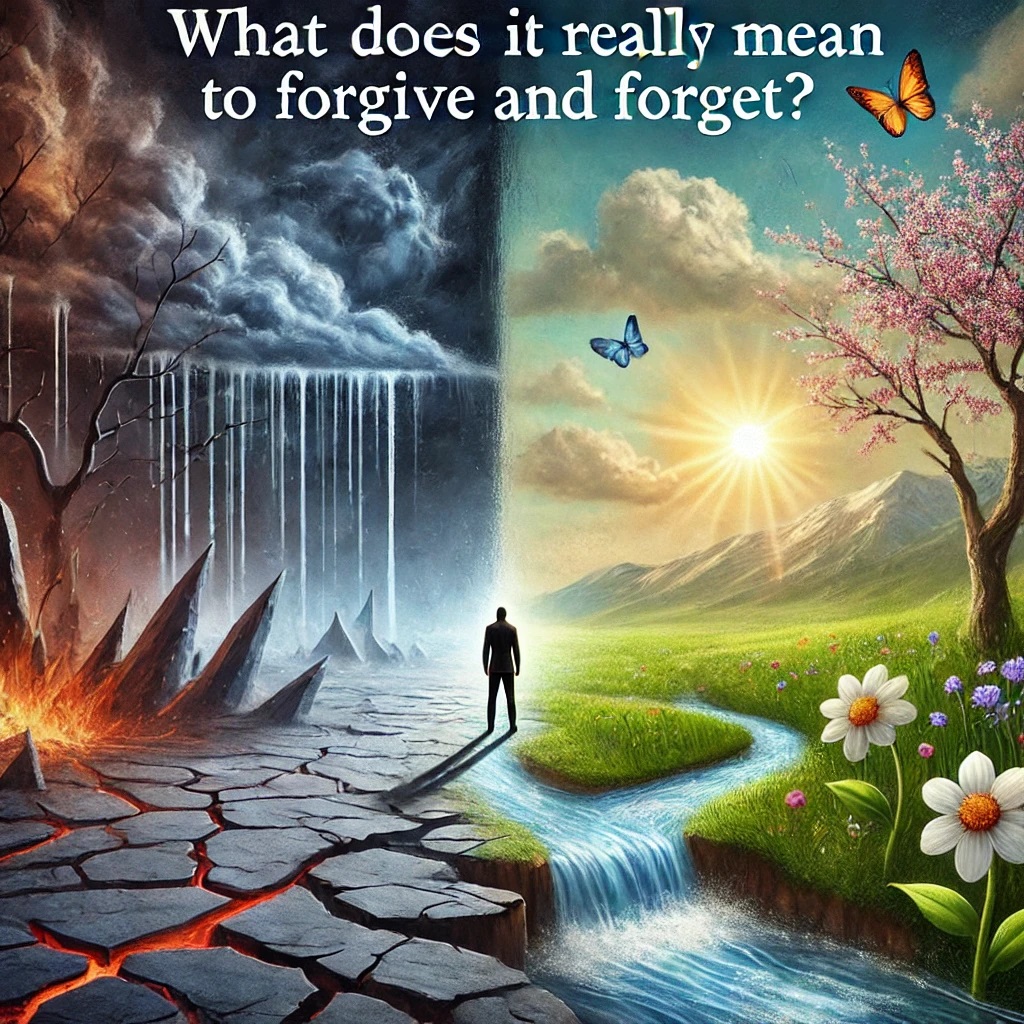
What Does It Really Mean to Forgive and Forget?
What Does It Really Mean to Forgive and Forget?
October 9, 2024 | Action, Coaching, Compassion, Competition, Courage, Creativity, Emotions, empathy, Ethical Marketing, Integrity, Leadership, Moral Compass, Patience, Selflessness, Transparency
What Does It Really Mean to Forgive and Forget? A Deeper Look at Healing and Moving Forward.
Forgiveness.What Does It Really Mean to Forgive and Forget? It’s a word that carries so much weight. We hear it everywhere— from religious teachings to advice we get from loved ones. But what does it really mean? And when people say, “forgive and forget,” do they mean it? Is it even seem possible?
Real life is messy. Hurt & Pain run deep, and sometimes the wounds we carry feel impossible to heal. So, let’s slow down and truly ask: What is forgiveness? What does it take to let go? And is forgetting really something we can or should aim for?
Forgiveness: More Than Just a Word
At its heart, forgiveness is an act of humanity. It’s deeply personal. It’s about standing face to face with your pain,acknowledging what has been done to you, and deciding—often in small, fragile steps—not to let that pain consume you any longer. It’s not about excusing the person who hurt you. It’s not about saying, "I’m okay with what happened." Forgiveness doesn’t mean that the pain just disappears overnight or that the wound heals instantly.
Forgiveness is more aboutyou. It’s about how you want to carry on with your life. It’s about letting go of the emotional chains that keep you tied to thehurt. But let’s be honest: forgiveness is hard. Some days it feels like you’ve let it go, and other days the pain creeps back in, hitting you when you least expect it. That’s the reality of it—it’s a process, not a destination.
Why Is It So Hard to Forgive?
We’re human! We feel things deeply. When someone hurts us, it can shake the very core of who we are. That wound doesn’t just vanish because we decide to forgive; it lingers, it aches. Sometimes it feels like holding onto the hurt protects us. Anger can become a shield, a way to guard ourselves against future pain. But over time, holding onto resentment can exhaust us. It weighs on our hearts and minds. It doesn’t just affect our relationship with the person who hurt us; it can spill over into other parts of our lives. We might become less trusting, more defensive, or even more distant from the people we love.
Forgiveness is hard because it requires us to let goof that shield. It asks us to believe that there’s something on the other side of that pain—peace, maybe even freedom.
Forgetting: Is It Possible? Is It Necessary?
“Forgive and forget.” The words sound good in theory, but in real life, can we actually forget?? The truth is, most of us can’t. And maybe we shouldn’t.
Forgetting doesn’t mean pretending the hurt never happened. In fact, pretending like it didn’t happen can sometimes do more harm than good. Our memories, especially painful ones, stick with us. They’re part of our story. They shape who we are and how we move forward. Trying to force yourself to forget might feel like erasing a part of yourself or denying the significance of what you went through.
But here’s the thing: You don’t have to forget to heal. You can remember, and still choose not to be defined by that memory. That’s what real forgiveness looks like. You might still think about what happened, but the raw pain and bitterness that once gripped you begin to soften. You can remember without being dragged down by it.
Why “Forgetting” Can Feel Impossible
Let’s be real here, If you’ve been hurt deeply, the idea of just "forgetting" can feel like a betrayal of your own self and your own pain. You might wonder, “How can I forget something that hurt me so much?” And that’s valid. People’s actions can leave scars that are impossible to erase. Maybe it’s not about erasing the memory, but about changing its place in your life. It no longer must be front and center in your mind, consuming your thoughts and emotions. Instead, it can move to the background, a part of your story, but not the thing that controls you.
Forgiving Without Forgetting
Many people ask, "Can I forgive without forgetting?" And the answer is yes, absolutely. In fact, most of us do this every day. We remember, but we choose to loosen the grip that memory has on us.
Forgiveness without forgetting allows you to heal while also learning from the experience. You remember the lesson—the boundary that needed to be set, the trust that was broken—but you don’t have to hold onto the bitterness or let it dictate your future actions. Forgiving doesn’t mean you have to welcome the person back into your life without caution. You can forgive and still choose to protect yourself from further harm.
The Real Challenges of Forgiveness
Forgiveness, at its core, is an act of courage. It’s saying, “I refuse to let what happened to me define how I move forward.” Lets not forget that A positive Mind Always Moves forward, right? But it’s also important to acknowledge that forgiveness doesn’t always come easily. Some hurts cut so deep that the idea of forgiving feels impossible. And that’s okay. Forgiveness is a journey. It’s okay if you’re not ready to forgive right away. Maybe you never will fully forgive, and that’s human too. Sometimes, the best we can do is work toward acceptance—accepting that the pain happened, and that while we can’t change the past, we do have control over how we let it affect our future.
The Path Forward
When we talk about “forgiving and forgetting,” maybe we’re really talking about moving forward in a way that feels authentic to us. It’s about finding peace in our own way, in our own time. For some, that means full forgiveness and leaving the past behind. For others, it’s about holding onto the lessons learned, while still finding a way to let go of the emotional burden.
What’s important is to be gentle with yourself during this process. Healing takes time. Some days you might feel like you’ve made progress, and other days the pain might feel fresh all over again. That’s normal. That’s being human. Forgive at your own pace.
Warping up
Forgiving and forgetting aren’t as simple as they sound. Forgiveness is a deeply personal journey that asks us to let go of resentment for our own peace of mind, even if the pain doesn’t fully disappear. Forgetting, on the other hand, is often neither possible nor necessary. The key lies in transforming the memory of the hurt into something that no longer controls you. It's about letting go of the emotional weight without erasing the past.
Forgive, But don’t rush yourself. And don’t feel pressured to forget. Healing is a process, and it’s one you deserve to walk at your own pace, with compassion and care. Ace 😊
Share this post :)